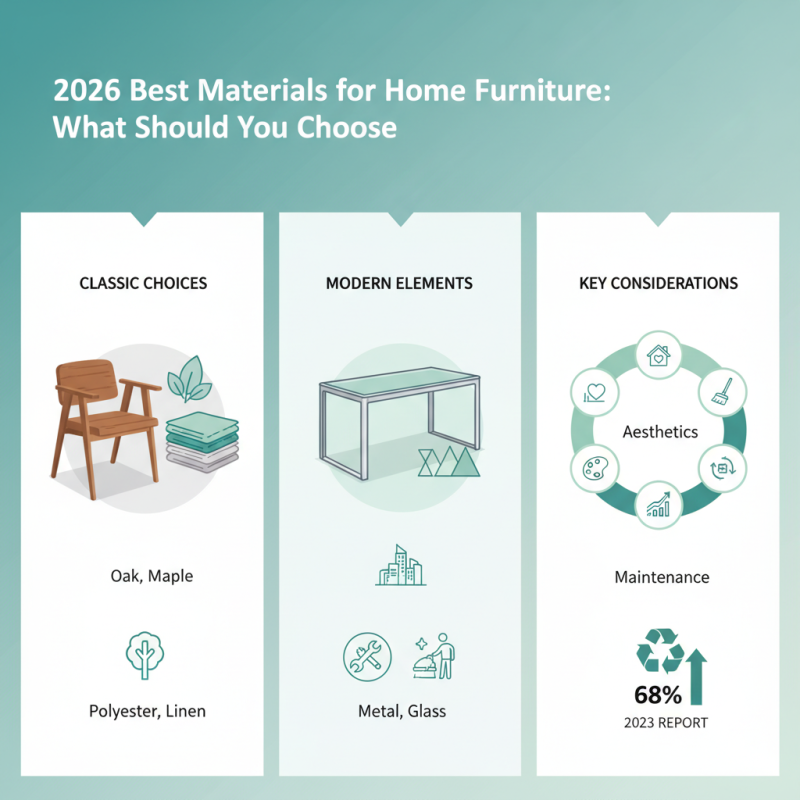
Choosing the right materials for home furniture is vital. With numerous options available, many homeowners ponder, "What Are The Best Materials For Home Furniture?" According to a 2023 report by the Furniture Today, the market is evolving. Trends indicate that sustainability is a key factor for modern consumers. In fact, 68% of buyers prioritize eco-friendly materials. This shift underscores the importance of selecting not just appealing, but also responsible options.
Wood remains a popular choice, particularly hardwoods like oak and maple. They offer durability and timeless aesthetics. Upholstered furniture benefits greatly from high-quality fabrics as well. Many experts suggest that materials like polyester and linen provide both comfort and resilience. However, one must consider their maintenance needs—stains can be challenging to manage, impacting long-term enjoyment.
Metal and glass are gaining traction as modern elements in furniture design. They introduce sleek styles, yet they can be cold and less inviting. Balancing form and function is essential. While choosing materials, reflect on your lifestyle, aesthetic preferences, and maintenance capabilities. Ultimately, the best choices align with both personal taste and practical needs.
Overview of Popular Materials for Home Furniture
When selecting materials for home furniture, consider the variety available. Wood, metal, and upholstery lead the list of popular options. Each material brings its unique aesthetics and durability. Natural wood offers warmth and charm but requires regular maintenance. Metal provides a modern look and exceptional stability. However, it can be cold and uninviting.
Upholstered furniture adds comfort and style. Fabrics range from cotton to leather, influencing both feel and durability. Soft textures contribute to a cozy atmosphere. Beware, though: fabrics can stain easily and may need frequent cleaning. The choice depends on lifestyle and personal taste.
Tips: When choosing materials, prioritize comfort and practicality. Think about how your furniture will be used daily. Be mindful of color and style; they greatly affect your home's vibe. Mixing materials can work well but requires careful balance to avoid visual clutter. Reflect on how easy it is to maintain each option and remember that not all beautiful pieces are practical.
Durability and Maintenance: Key Factors in Material Selection
When selecting materials for home furniture, durability and maintenance are crucial. Studies show that furniture made from high-quality materials lasts longer. For instance, hardwoods like oak and maple have a lifespan exceeding 20 years when properly cared for. In contrast, cheaper materials may require replacement in just a few years.
Maintenance is not just about cleaning—it also involves regular care. For example, upholstered pieces typically need professional cleaning every one to three years, depending on usage. However, leather might only require a quick wipe-down with a damp cloth. This variance can affect long-term costs and convenience.
Choosing durable materials means considering their resistance to wear, tear, and stains. Some synthetic fabrics offer great performance but may not breathe well. On the other hand, natural fibers, while beautiful, can be delicate. Balancing aesthetics and practical needs often leads to tough choices, reminding us that no material is perfect.
Comparing Aesthetics: Visual Appeal of Different Materials
When choosing furniture materials, aesthetics play a key role. Wood, metal, and fabric all offer distinct visual appeals. Each material brings its own character to a space. Wood exudes warmth and tradition, while metal adds a modern touch. Fabric, on the other hand, introduces softness and texture.
The color and finish of these materials matter too. Dark wood can create a dramatic effect, while light shades can make a room feel spacious. Metallic finishes often reflect light, creating an illusion of openness. Fabrics come in countless patterns and colors, allowing for personal expression. However, the challenge lies in choosing materials that not only look good but also complement each other.
It's essential to consider maintenance as well. Some materials may look stunning at first but can be high-maintenance in the long run. A beautiful fabric might stain easily, while a chic metal piece could show fingerprints. Balancing aesthetics with practicality is crucial. This reflection on choices can lead to a space that not only looks great but feels inviting too.
2026 Best Materials for Home Furniture - Comparing Aesthetics: Visual Appeal of Different Materials
| Material |
Visual Appeal |
Texture |
Color Variety |
Durability |
| Wood |
Warm and natural |
Rich grain patterns |
Wide range of stains |
Highly durable |
| Metal |
Sleek and modern |
Smooth and cool |
Limited colors |
Very durable |
| Fabric |
Soft and inviting |
Varied textures |
Vast array of colors |
Moderately durable |
| Glass |
Elegant and airy |
Smooth and reflective |
Limited color options |
Fragile but durable |
| Plastic |
Versatile and innovative |
Smooth, can replicate textures |
Extensive range of colors |
Variable durability |
Sustainability Considerations in Material Choices
When selecting materials for home furniture, sustainability is key. Natural materials like wood, metal, and organic fabrics often have less impact on the environment. However, it’s crucial to consider where these materials come from. Are the woods sustainably sourced? Is the metal recycled? Knowing the supply chain can help you make more informed decisions.
Not all materials labeled as eco-friendly meet high standards. For instance, some so-called "biodegradable" items only break down in specific conditions. Also, some manufacturers may use sustainable practices but fall short in other areas, like fair labor. It’s essential to research and scrutinize certifications. Evaluating both the environmental and social impacts of your choices is important for a lasting positive effect.
In addition, durability matters. Some sustainable materials may not hold up as well over time, leading to waste. Choosing a piece that lasts can prevent frequent replacements. Reflect on your choices and consider their long-term consequences. Sustainable living involves continuous learning and adapting.
Cost Analysis: Budgeting for Quality Furniture Materials
When considering the best materials for home furniture, cost is a critical factor. Quality materials impact both the longevity and aesthetics of your furniture. For instance, hardwoods like oak and maple offer durability. However, they come with a higher price point than softwoods. Budgeting for these materials requires careful evaluation.
Many homeowners overlook the maintenance costs associated with materials. For example, upholstered furniture might initially be more affordable. Yet, fabrics can wear down quickly and require more frequent replacement. This can lead to higher long-term expenses. On the other hand, metal or glass tables can be more expensive upfront but often withstand the test of time.
Consider recycled materials as a sustainable option. They can provide both cost savings and unique designs. However, quality may vary significantly. Research is essential. Don’t rush your decision based on price alone. Long-lasting pieces may require a larger initial investment. Balancing immediate affordability with long-term value is crucial. Reflect on your priorities when making choices for your home.
2026 Best Materials for Home Furniture - Cost Analysis
FAQS
: Popular materials include wood, metal, and upholstery. Each has its own look and durability.
Wood adds warmth and charm but needs upkeep. Metal is stable but can feel cold and uninviting.
Upholstery adds comfort and style. Soft fabrics create a cozy feel, but they may stain easily.
Upholstered items may need professional cleaning every one to three years, depending on usage.
Focus on comfort and practicality. Think about daily use and the impact of color on your home's vibe.
Cheaper materials might need replacement sooner. Quality materials like hardwood can endure for over 20 years.
Mixing materials can enhance design, but it requires care to avoid clutter and maintain comfort.
Some synthetics are durable, but they may not breathe well. Natural fibers are beautiful but can be delicate.
Not all beautiful pieces are easy to maintain. Reflect on everyday use and long-term costs when choosing.
Maintenance affects convenience and costs. Regular care is necessary, so choose materials that fit your lifestyle.
Conclusion
In the quest to determine "What Are The Best Materials For Home Furniture," it's essential to evaluate various factors. Popular materials such as wood, metal, upholstery, and synthetic composites each offer distinct advantages in terms of durability and maintenance. Durable materials tend to require less upkeep, making them appealing for households with high traffic.
Additionally, the aesthetics of different materials play a significant role in the overall visual appeal of furniture pieces, allowing for personalization to suit varied interior designs. Sustainability is another critical consideration, as eco-friendly materials have gained popularity among environmentally conscious consumers. Finally, a thorough cost analysis highlights the importance of balancing quality and budget, ensuring that the chosen materials not only meet functional and aesthetic needs but also align with financial constraints.

 TYE Home Furnishing